
Huishi
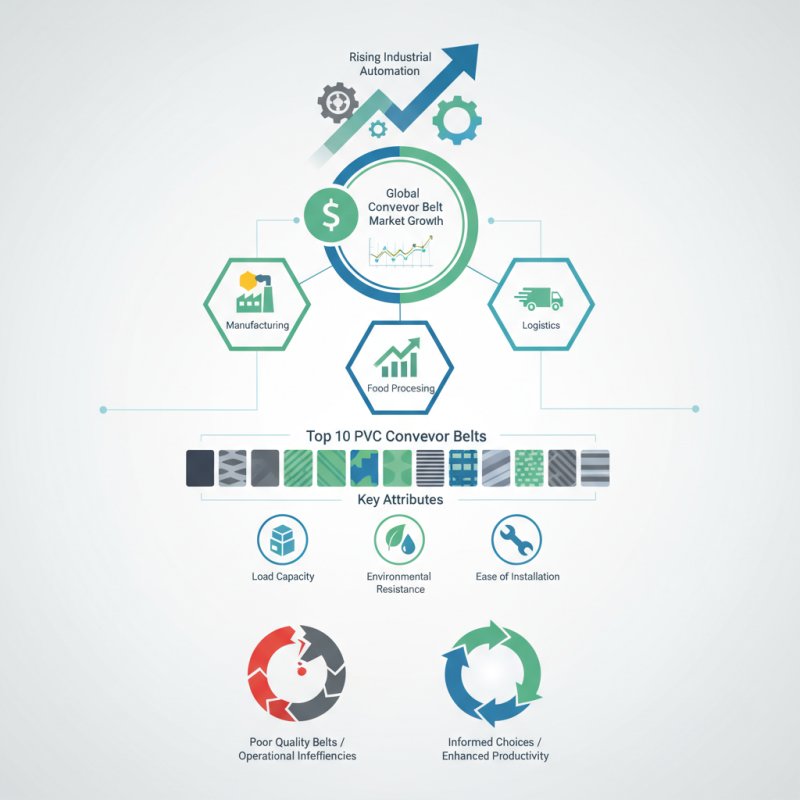
The PVC conveyor belt market is witnessing significant growth, buoyed by rising industrial automation. According to Grand View Research, the global conveyor belt market reached $4.07 billion in 2022. This figure is projected to expand at a compound annual growth rate (CAGR) of 4.6% from 2023 to 2030. Understanding the demands of global buyers is crucial for manufacturers aiming for success in 2026.
PVC conveyor belts are essential in various sectors, including manufacturing, food processing, and logistics. They offer durability, flexibility, and resistance to wear and tear, making them indispensable for efficient operations. However, not all PVC conveyor belts meet quality standards. Buyers must be cautious, as some products may fall short in performance, leading to operational inefficiencies.
As we explore the top 10 PVC conveyor belts for global buyers in 2026, it is vital to highlight key attributes such as load capacity, environmental resistance, and ease of installation. A thoughtful selection process can mitigate risks associated with poor-quality belts. Making informed choices is essential to harness the full potential of PVC conveyor technology for enhanced productivity.
PVC conveyor belts are vital in various industries. They transport materials efficiently while offering durability and versatility. These belts are lightweight, resistant to chemicals, and suitable for different temperature ranges. Factories, food processing plants, and logistics companies widely use them. Their adaptability makes them a popular choice for global buyers.
Understanding the applications of PVC conveyor belts is crucial. They serve in packaging, assembly lines, and material handling. The belts can carry bulk goods or small products, depending on the design. However, not all PVC belts are created equal. Each application requires careful consideration of thickness, friction, and surface texture.
Tips: Always evaluate the specific needs of your operation. Consider environmental factors that may affect the belt's performance. Regular maintenance can prolong the lifespan of your conveyor system. Remember, choosing the wrong type of belt may lead to inefficiencies and increased costs. Stay informed and rely on expert advice for better decision-making.
When selecting the best PVC conveyor belts in 2026, several criteria are essential.
Material quality is paramount. High-quality PVC allows for better durability and resistance to wear.
According to industry reports, belts made from top-grade PVC can improve operational efficiency by up to 25%.
This is crucial for sectors like logistics and manufacturing.
Another critical factor is the belt's load capacity.
Different applications require varying load capabilities. Selecting a belt that matches your operational needs is vital.
Overloading can lead to premature wear, increasing costs in repairs and downtime.
Research indicates that nearly 60% of conveyor failures are due to inappropriate load management.
Additionally, consider the environment where the belt will operate.
Extreme temperatures and humidity levels affect performance.
Manufacturers must account for these factors to avoid unexpected breakdowns.
It's evident that many companies neglect this aspect, resulting in significant operational disruptions.
Prioritizing these selection criteria can enhance efficiency and reliability in any conveyor system.
In the fast-evolving world of industrial materials, PVC conveyor belts are essential. These belts are utilized across various sectors, including food processing, logistics, and packaging. The global market for PVC conveyor belts is projected to grow at a CAGR of over 4% by 2026, reflecting a rising demand for efficient material handling solutions.
Key manufacturers in this sector focus on specific qualities such as durability and flexibility. Advanced manufacturing techniques allow for the creation of various belt types, catering to unique industry needs. Products with enhanced wear resistance and chemical stability are gaining traction. This is crucial, as industries need belts that can withstand rigorous usage.
Tips: Always assess the specific application before choosing a belt. Not all PVC conveyor belts are suited for every task. Check industry reports and reviews for insights on performance and reliability. Moreover, continuous feedback from end-users can reveal areas for improvement. Consider factors like temperature range and load capacity when evaluating options.
Modern PVC conveyor belts are evolving rapidly, driven by advancements in materials and technology. These belts now feature enhanced durability, resistance to wear, and improved flexibility. Innovations like anti-static properties and food-safe certifications are crucial for various industries. The incorporation of lightweight materials helps reduce energy costs for operations, making them more efficient.
Tips: Look for belts that offer a longer lifespan. Regular maintenance can prevent unexpected failures. Check specifications to ensure compatibility with your machinery.
Temperature resistance is another key feature. Conveyor belts now operate effectively in extreme conditions. This allows industries like food processing to maintain hygiene and safety. Magnetic properties are also being used more frequently, enabling seamless transportation of metal materials. Yet, selecting the right belt can sometimes be challenging, leading to occasional mismatches.
Tips: Consult with a knowledgeable provider. Understanding your specific needs helps in choosing the best option. Conducting thorough research can uncover valuable insights.
As we look ahead to 2026, the trend is clear: PVC conveyor belts will continue to adapt. Emphasizing sustainability, manufacturers are exploring eco-friendly materials. However, not all innovations are perfect; some new features may not meet all user expectations and need reevaluation.
The PVC conveyor belt industry is evolving rapidly. Market trends predict significant growth in demand by 2026. Industries are increasingly recognizing the benefits of PVC belts, particularly in terms of durability and versatility. These belts are resistant to chemicals and abrasion, making them ideal for various applications.
Innovations in manufacturing processes are influencing market dynamics. Lightweight designs and improved flexibility are becoming essential features. Companies are exploring eco-friendly materials to appeal to sustainability-conscious buyers. There are also concerns about potential over-reliance on PVC. This reliance might pose risks if market conditions shift unexpectedly.
Regional markets are adapting to these trends. Asia-Pacific shows a robust increase in production and consumption. However, buyers must remain cautious about fluctuations in raw material costs. Anticipating these changes is crucial for long-term planning. Industry stakeholders should be prepared to adjust strategies as new technologies emerge.
| Rank | Belt Type | Width (mm) | Thickness (mm) | Load Capacity (kg/m2) | Estimated Price ($/m) |
|---|---|---|---|---|---|
| 1 | Lightweight PVC | 300 | 2 | 80 | 5.00 |
| 2 | Medium Duty PVC | 500 | 3 | 150 | 10.00 |
| 3 | Heavy Duty PVC | 600 | 4 | 250 | 15.00 |
| 4 | Food Grade PVC | 400 | 2.5 | 100 | 12.00 |
| 5 | Antistatic PVC | 300 | 2 | 90 | 9.00 |
| 6 | Heat Resistant PVC | 500 | 5 | 200 | 14.00 |
| 7 | Cold Resistant PVC | 600 | 4 | 270 | 16.00 |
| 8 | Oil Resistant PVC | 400 | 3.5 | 110 | 11.50 |
| 9 | High Grip PVC | 500 | 4.5 | 130 | 13.00 |
| 10 | Specialty PVC | 700 | 6 | 300 | 18.00 |
: PVC conveyor belts are used across various industries to transport materials efficiently. They are common in factories and logistics.
Evaluate your operational needs, including load capacity and environmental factors. These elements significantly impact your belt's performance.
High-quality PVC improves durability and can enhance operational efficiency. Cheaper materials may lead to more frequent failures.
Inappropriate load management is a common cause. Nearly 60% of failures happen due to overloading or poor maintenance.
Regular maintenance checks are essential. This can prolong the lifespan and efficiency of your conveyor system.
The market is shifting toward lightweight designs and eco-friendly materials. These innovations add flexibility and sustainability.
Extreme temperatures can impact performance. Not considering climate conditions might lead to unexpected breakdowns.
Avoid choosing a belt without understanding your specific needs. Misjudging requirements can lead to inefficiencies and higher costs.
Yes, over-reliance could be risky if market conditions change. Flexibility in sourcing materials is vital for long-term success.
Growth is predicted by 2026, driven by innovation and increased demand in various industries, but caution is advised regarding raw material costs.
The article "Top 10 PVC Conveyor Belts for Global Buyers in 2026" provides a comprehensive analysis of PVC conveyor belts, highlighting their versatile applications across various industries. It emphasizes the criteria for selecting the best PVC conveyor belts in 2026, which include durability, flexibility, and cost-effectiveness. Additionally, the article explores leading manufacturers and brands that are shaping the market, as well as innovative features and technologies that enhance the functionality of modern PVC conveyor belts.
Furthermore, the article examines current market trends and future projections for the PVC conveyor belt industry, indicating a growing demand for advanced materials that meet the evolving needs of global buyers. As advancements in technology continue to push boundaries, the PVC conveyor belt market is set for significant evolution, ensuring efficiency and reliability in various material handling processes.
