
Huishi
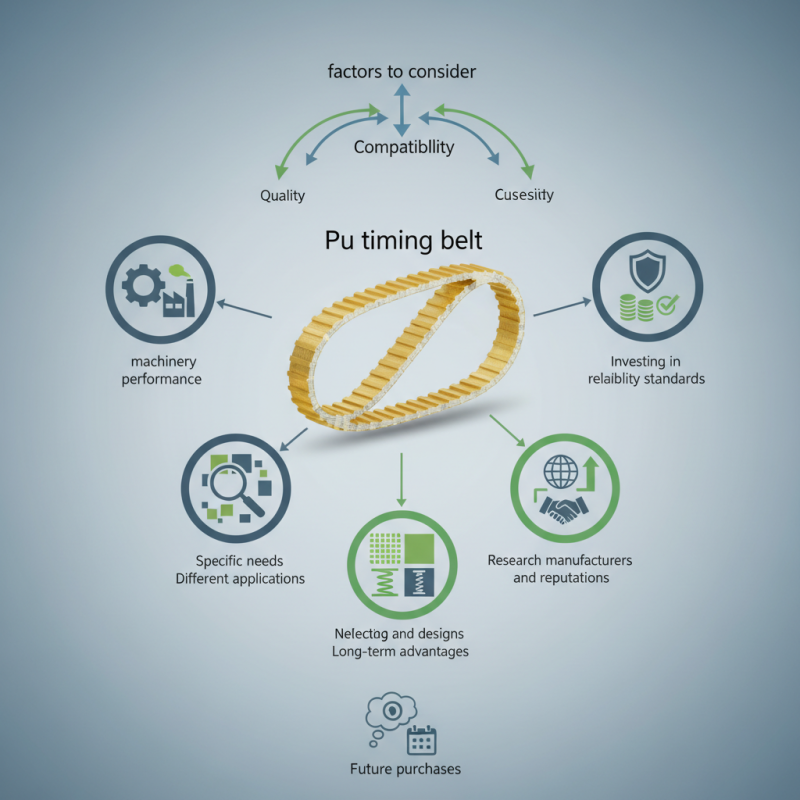
When selecting the right Pu Timing Belt, industry experts emphasize the importance of quality and compatibility. "A well-chosen Pu Timing Belt can significantly improve the performance of your machinery," says David Johnson, a leading expert in the field. His insights highlight how crucial it is to consider various factors before making a decision.
Choosing a Pu Timing Belt involves understanding your specific needs. Different applications require different materials and designs. For example, high-load systems may benefit from reinforced belts. Ignoring these nuances can lead to suboptimal performance or even mechanical failure. The market offers a variety of options, and careful consideration is vital.
It's tempting to go for the cheapest option, but that can backfire. Investing in a reliable Pu Timing Belt may bring long-term advantages. Additionally, take the time to research manufacturers and their reputations. This ensures a belt that meets industry standards. Reflecting on past decisions can help refine your choices for future purchases.
PU (polyurethane) timing belts have gained popularity due to their durability and versatility. They offer a lightweight option that resists wear and tear. Understanding their composition is essential for making informed choices. PU timing belts typically feature strands of polyester, which enhance tensile strength. This makes them ideal for applications that require precision timing and minimal stretch over time.
When selecting a PU timing belt, consider the specific requirements of your machinery. Width and pitch are vital factors. A belt too narrow may slip under load, while one too wide may cause excess friction. Pay attention to operating conditions as well. High temperatures and exposure to chemicals can degrade belt performance. Often, buyers overlook this aspect, leading to premature failures.
Moreover, evaluating the installation process is crucial. A poorly installed belt can lead to misalignment. This can affect the overall efficiency of the system. Users must ensure proper tensioning techniques to achieve optimal performance. It is worth noting that even experienced technicians can make mistakes during installation. Regular maintenance checks can help identify potential alignment issues before they escalate. Thinking critically about these factors is key to selecting the right PU timing belt for your needs.
When selecting a PU timing belt, understanding key specifications is essential for optimal application performance. The material composition of the belt plays a crucial role. PU belts offer excellent wear resistance and durability, with a tensile strength reaching up to 80 MPa, as reported by industry standards. This ensures longevity in demanding applications but requires careful selection of thickness and width to match specific tasks.
Tips for choosing the right PU timing belt include assessing operating temperature. Usually, PU belts work efficiently in temperatures ranging from -30°C to 80°C. Beyond this range, performance may degrade. It's also vital to consider the load capacity. For instance, a belt designed for high torque applications needs a different profile compared to one used in lighter, less demanding conditions.
Another consideration is compatibility with existing equipment. Mismatched specifications can lead to failures or inefficiency. A recent survey revealed that over 20% of industrial downtime is due to incorrect belt selection. By verifying every detail and investing in precise specifications, users can avoid common pitfalls. Correctly chosen PU timing belts not only enhance performance but also significantly cut maintenance costs.
Choosing the right PU timing belt requires careful consideration of its quality and durability. Factors like material composition play a crucial role. A high-quality belt is typically made from premium polyurethane, enhancing its lifespan. Inspect the belt’s surface for any signs of wear. Smooth, consistent surfaces indicate a well-manufactured product.
When evaluating a timing belt, consider its tensile strength. Stronger belts can withstand higher loads. Look for specifications detailing the belt’s testing results under load conditions. This gives insight into its durability. Choosing a belt that can endure stress without stretching is vital.
Tip: Always compare different options. Don’t settle for the first product you find. Subtle differences in design can impact performance. Pay attention to installation recommendations. A poorly installed belt may fail faster, regardless of quality. Documentation should guide you. The perfect belt is one that balances performance with longevity.
Choosing the right PU timing belt can be a daunting task, especially with so many brands on the market. Each manufacturer possesses unique specifications, which can affect performance and durability. Research suggests that belts made from high-quality polyurethane often exhibit better wear resistance and elongation properties. According to industry studies, belts with reinforced fibers demonstrate a significant reduction in stretch, ensuring optimal timing accuracy.
When assessing different brands, be sure to look into their proprietary formulations. Some manufacturers use additives that improve thermal stability, extending service life. A report from the Automotive Research Institute indicates that belts from reputable sources show a failure rate as low as 3% over their lifetime. A lower failure rate signifies a trusted brand.
Tip: Always review customer feedback to gauge long-term satisfaction. Look for signs of premature wear or noise. Also, consider contacting the manufacturer for technical data sheets. This provides insight into their warranty policy and fabrication process. An informed choice can lead to improved performance in your applications.
This chart compares the durability scores of various timing belt materials based on industry testing. Higher values indicate better performance and longevity. It will help you understand which type of timing belt might be best suited for your needs.
When selecting a PU timing belt, installation and maintenance requirements are critical factors. Proper installation directly impacts performance and durability. According to industry studies, approximately 30% of timing belt failures stem from improper installation techniques. Ensuring correct alignment and tension is essential. Misalignment can lead to uneven wear and premature failure.
Maintenance practices must also be prioritized. A report from the Mechanical Engineering Journal highlights that belts should be inspected regularly, with over 70% of professionals recommending checks every 500 hours of operation. These inspections should include checking for wear, fraying, and proper tension. Many users neglect some of these aspects, leading to unexpected failures.
Furthermore, consider environmental factors impacting the belt’s lifespan. Frequent exposure to extreme temperatures and contaminants can affect performance. A research study indicated that belts exposed to harsh environments had a 40% higher failure rate. Hence, planning maintenance schedules and selecting appropriate installation practices can significantly enhance the timing belt's longevity and efficiency.
| Dimension | Recommendation | Maintenance Frequency | Common Issues | Lifespan |
|---|---|---|---|---|
| Length | Ensure proper measurement before installation | Every 50,000 km | Misalignment | 50,000 to 100,000 km |
| Width | Choose based on pulleys | Check every service | Belt wear | Up to 120,000 km |
| Material | Opt for high-quality PU materials | Annually | Cracking | 3 to 5 years |
| Teeth Shape | Match with the sprocket design | Every 40,000 km | Slippage | Varies according to use |
: PU timing belts typically feature strands of polyester for enhanced tensile strength.
A belt that is too narrow may slip, while one too wide can cause excess friction.
High temperatures and chemicals can degrade performance, leading to premature failures.
Poor installation can lead to misalignment, affecting system efficiency.
Proper tensioning techniques are essential for achieving optimal belt performance.
Reinforced fibers in belts reduce stretch and improve timing accuracy.
Regular maintenance checks help identify alignment issues before they escalate.
Feedback can reveal signs of premature wear and inform long-term satisfaction.
They provide insights into warranty policies and fabrication processes.
Even experienced technicians can make mistakes, impacting overall performance.
Choosing the right PU timing belt involves a comprehensive understanding of its fundamental characteristics and specifications tailored to your specific application. First, it's essential to grasp the basics of PU timing belts, including their design and functionality. Next, carefully identifying key specifications such as size, tooth profile, and load capacity will ensure the belt meets your operational needs.
Furthermore, evaluating the quality and durability of the PU timing belt is critical for long-term performance. Factors like material composition and resistance to wear can significantly influence the lifespan of the belt. Comparing different brands and manufacturers allows for informed decisions based on quality assurance and reliability. Lastly, don't overlook the installation and maintenance requirements, as proper handling is key to maximizing the efficiency and longevity of your PU timing belt. By considering these aspects, you can make a well-informed choice that enhances your machinery's performance.