
Huishi
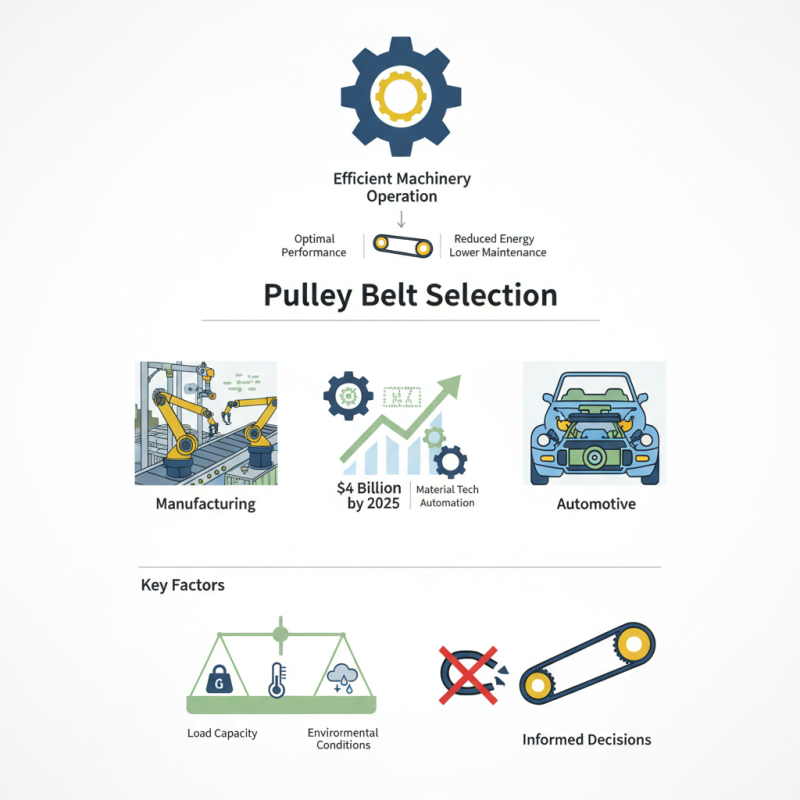
Selecting the appropriate Pulley Belt is crucial for efficient machinery operation. Industry reports indicate that improper belt selection can lead to a 10-30% decrease in efficiency. A well-chosen belt ensures optimal performance, reducing energy consumption and maintenance costs.
In sectors like manufacturing and automotive, the demand for reliable pulley systems is paramount. According to the latest market research, the global pulley belt market is expected to reach $4 billion by 2025. This growth is driven by advancements in material technology and increased automation in industries.
Understanding the specific requirements of your application is key. Factors such as load capacity, temperature, and environmental conditions must be evaluated. A mismatch in these areas can result in belt wear or failure. Balancing these considerations can seem daunting. Yet, making informed decisions leads to better long-term outcomes.
Selecting the appropriate pulley belt is crucial for efficiency in various applications. Different types of pulley belts serve unique purposes. V-belts are ideal for applications requiring high torque, while flat belts are better for low-power transmission. Each type offers distinct strengths and weaknesses.
Consider the operational environment when choosing a belt. Temperature, humidity, and exposure to chemicals can affect performance. For example, rubber belts may degrade faster in harsh conditions. It's essential to evaluate these factors to avoid costly breakdowns. A poorly chosen belt can lead to increased wear or failure of the entire system.
Keep in mind that maintenance is also critical. Regular inspections can reveal early signs of wear and tear. Not everyone remembers to do this. Sometimes, people overlook minor issues, which can become serious problems later. Understanding the specific needs of each application leads to more informed belt selections and better overall system reliability.
When selecting a pulley belt, several factors demand careful consideration. One critical aspect is the material composition. Common materials include rubber, polyurethane, and leather. Each offers unique benefits suited for various applications. According to the Conveyor Equipment Manufacturers Association, polyurethane belts excel in durability and resistance to chemicals, making them ideal for harsh environments.
Another essential factor is the belt size and configuration. The diameter of the pulley and the width of the belt must align perfectly. An improper fit can lead to increased wear and energy loss. Research shows that even a 5% misalignment can reduce efficiency by over 30%. This highlights the importance of precise measurements during selection.
The operating environment also plays a significant role. High temperatures or humidity can affect belt performance. According to the American Society of Mechanical Engineers, belts in fluctuating environments may require additional considerations, such as enhanced tensile strength or temperature resistance. Ultimately, thorough evaluation and consideration of these factors will lead to better performance and longevity of the pulley belt in specific applications.
Choosing the right pulley belt starts with understanding the measurements. Accurate dimensions ensure that the belt fits properly and functions effectively. Begin by measuring the diameter of the pulleys. Use a caliper for precision. Record the inner and outer diameters to assist in your selection.
Pay attention to the width of the belt. This measurement is key for optimal performance. A belt that's too wide can rub against adjacent components. A belt that's too narrow may slip off during operation. Each application demands a specific width, so consult technical specifications for guidance.
Tips: Don't rush the measurement process. Take multiple readings to avoid mistakes. It's advisable to double-check against your machine's manual. Remember, even slight miscalculations can lead to inefficiencies or equipment failure. Reflect on previous experiences; what went wrong? Small details make a big difference in pulley belt performance. You want reliability in your systems, so precision is non-negotiable.
Choosing the right pulley belt relies on understanding the material options available. The durability of a pulley belt directly impacts its performance. Synthetic materials like polyurethane or rubber offer flexibility and resistance to wear. Steel belts are also common, known for their strength and longevity. However, they may be prone to corrosion if not adequately protected.
It's essential to consider the operational environment when selecting materials. High temperatures may lead to reduced performance in rubber belts, while extreme cold can make some plastics brittle. Assessing these conditions helps determine the best choice for longevity.
A less obvious factor is compatibility with other components. A new belt must fit well with pulleys and gears. Poor alignment can lead to premature wear and failure, regardless of the material's quality. Regularly reviewing the system’s performance can uncover hidden issues. This reflection can guide future choices. It's crucial to remain adaptable, learning from each application to enhance efficiency.
When it comes to pulley belts, regular maintenance is essential for longevity. A well-maintained belt can prevent failures and costly downtime. Check for wear and tear regularly. Signs include fraying or cracks on the surface. Don't overlook these details, as they indicate potential issues.
Keeping the belt clean is another vital tip. Dirt and debris can cause excessive wear. Wipe the belt with a damp cloth regularly. Avoid harsh chemicals that can degrade the material. Cleaning enhances performance and extends the lifespan of your pulley belt.
Tension adjustments are also crucial. A belt that is too tight can cause strain, while one that is too loose may slip. Regularly inspect the tension and adjust as needed. Consider this a part of your routine maintenance. Ignoring tension can lead to premature belt failure. Taking these steps consistently can add years to your pulley belt's life.
: Common materials include rubber, polyurethane, and leather. Each material has its unique benefits.
Belt size and configuration are critical. Misalignment, even as small as 5%, can reduce efficiency.
High temperatures and humidity can affect performance. Enhanced strength may be needed for fluctuating conditions.
Look for signs like fraying or cracks. Regular checks can prevent potential failures.
Wipe with a damp cloth regularly. Avoid harsh chemicals that may damage the material.
Correct tension prevents strain and slipping. Regular inspection is key to maintenance.
Ignoring tension can lead to premature belt failure. Regular adjustments are necessary.
No, harsh chemicals can degrade the material. Stick to gentle cleaning methods for the best results.
Regular checks and cleaning prevent issues. Consistent care adds years to belt longevity.
Yes, improper fit can cause increased wear and energy loss. Precise measurements are essential.
When selecting the right pulley belt for your specific applications, it's essential to understand the various types available and their respective functions. Different applications may require distinct pulley belts based on load capacity, speed, and environmental conditions. Factors such as dimension accuracy and material durability significantly influence the performance and longevity of the pulley belt. Measuring the required dimensions correctly ensures a proper fit, while evaluating material options like rubber, neoprene, or polyurethane can enhance durability and efficiency.
Additionally, regular maintenance practices are crucial for extending the lifespan of the pulley belts. This includes routine inspections for wear and tear, proper tensioning, and ensuring alignment within the system. By considering these aspects, you can make a well-informed decision when choosing a pulley belt that meets the demands of your equipment and operational requirements.
